` arjan's blog

Wednesday, November 05, 2008

The I in IT...

Today during lunch I had a nice discussion with some colleagues about information sharing between for instance the Dutch government and the US government whenever someone is flying to the US.

It's interesting that especially people in the IT industry are pretty paranoia about their personal info and who get's hold of it. Probably because we know what you could do with the information if you get hold of it.

Personally, I think that it is no problem if information is shared as long as the purpose is clear and it can really prevent something or enable pro-active handling. That's currently not yet the case I think. To my opinion a lot of information is shared and stored, only to be touched whenever something has already gone wrong, not before...

Another interesting thought is what if, like with open source software, everyone would share all of his own details? I know that currently nobody would present his bank-account balance on a blog or post his mortgage details on twitter. But it's an interesting thought... Who would have predicted that today so many software vendors would provide the source code of their software to the community years ago?

Who knows what happens to the I in IT :-)

Monday, September 29, 2008

Nothing but the real thing

I'm writing this in the train back home from the airport. Just had a 10 hour flight from San Francisco to Amsterdam. Actually not the best part of the whole thing, but it's definitely worth it. Meeting people, attending sessions, eating the sponsored lunches, going to the customer appreciation event, Oracle OpenWorld was great! It was fantastic!

I was just thinking of the fact that in IT currently Social Computing, collaboration or Enterprise 2.0 within the boundaries of an enterprise are very hot things. So you'd think that with all new technology in place in a couple of years attending a conference might mean not going there physically, but virtually.
To my opinion attending a conference will not be as much fun, and as worthwhile then now.

I think that conferences like this, although technology is advancing rapidly will still be about people flying in from all over the world and meeting each other, no chat or webcam session can change that. I saw a lot of people finally meeting each other after a long while of being in email contact or even chatting or blogging together and everyone start smiling at that point.

Nothing but good old human interaction, face to face, discussing live and drinking beers together.

Nothing but the real thing.

CTRL + Shift what a combo..

Windows (XP or Vista) users in the US probably don't experience this, but Europeans do: There is a "hidden feature" in both XP and Vista namely the CTRL and Shift shortcut that really changes things drastically in your Windows environment...

So what is the shortcut all about?! Well it switches the keyboard layout to the next keyboard layout that is setup on your computer. So what is the big deal? You'll only have one keyboard layout, right?! So no sweat! Well if you live in the US that's correct, but if you live in The Netherlands for instance and you selected your own time zone and country during initial setup, Windows will do a couple of nifty things for you automatically...

Windows will automatically create settings for your home language AND create a keyboard layout setting, the default one for your country, although in a lot of countries the keyboard layout is US 101.

And there you are working on some document or Java code or even writing a blog. You intend to select a  line or a couple of words so you press CTRL + Shift. You change your mind so you don't press any other key while holding down CTRL + Shift and you release them. Et-voila! when you continue typing you find out that a lot of the keys you hit do not turn out to be the keys you intended to use!

Actually I myself found out this "hidden feature" already a couple of years ago, but it seems today a lot of people are still suffering from this: closing all programs, rebooting windows or even reinstalling Windows to get rid of the problem.

So the one feature I would definitely want to be in Windows 7 or actually NOT to be in the system is the default keyboard layout switching shortcut CTRL + Shift.

Thank you Microsoft. Maybe Bill and Seinfeld can record an item on this topic, sounds like a lot a of fun to me...

Oracle OpenWorld 2008: Policies, SCA, Beehive and...

Most of the conferences have a couple of things they want you to take home. Although I understand that last year was already about SCA and policies, it's still pounding here now. And of course Beehive... Well BEA had Beehive as their "making life easy", "Spring like" framework, but is brand new! Or isn't it...

Well actually Oracle Beehive is actually an awful lot like the Liquid Enterprise BEA revealed at BEA World in 2007. Then again, that's one of the reasons why they bought BEA, so no wonder!

SCA is hot at Oracle OpenWorld as well. They are pushing mainly the Weblogic Application Server platform and the BPEL / BPM products forward as their SCA enabling platform, ready for the agile Enterprise future. I'm not so sure yet about the real advantage of SCA over plain old BPM. So mainly what the added value is above having business processes being defined is that you have a good notion of what is in your composition (which services), what the interfaces (dependencies) to other components are and what the properties for the component are. You still have the point (as with BPM) that services are deployed over several systems and you'll have a deployed composition of the services on another system. A good thing is that you're not restricted to having Web Services, with SCA a composition might also contain Java classes or .Net classes. Which actually could be done with BPM using for instance the Oracle Service Bus! Nevertheless SCA is a nice clean way of composing Service based applications and since Oracle is pushing it might be here to stay.
It seems however it is mainly a technology thing, which might not make it up to deciding business level.

The scoop of the conference was actually presented on Wednesday by Larry Ellison (CEO of Oracle) in what you can best summarize as a sales pitch or commercial of about 30 minutes of the new HP - Oracle Exadata Data server.
Cool server technology but I did not like the presentation actually. Rather then setting out the new Oracle way forward he spent the whole presentation, which looked a bit unprofessional("next slide please...") on how good the relationship with HP is (elephants do love elephants) and what a perfect hardware / software combination they created for handling bigger and bigger query data throughput demands. Impressive, but I didn't like the keynote at all!
Just to be complete a little info on the Exadata servers technology. The server consists of several high performing Disks combined with Intel processors for running queries on the data. This together with a high bandwidth data pipe for sending out data puts together the Exadata server. The real trick with the server is that queries are performed on the same server that hosts the data (not on a separate server) and only the result data is passed to the database server that requested the query.
This can be a good thing for some of the Oracle customers, but it will be a limited set. The other thing is: how about inserts, updates and delete? These servers are mainly tuned for high performance on querying, not for those. Maybe next year...

Tuesday, September 23, 2008

Oracle OpenWorld 2008: Tom Kyte keynote - The best way...

Just went to see Tom Kyte's keynote titled "The best way...". It once again made me realize that trying to aim for simple solutions is the best way to do things. He had one slide in his presentation stating: "you don't need 14 tiers in every solution to get things working!".

It all comes down to K.I.S.S. (Keep IT Simple, Stupid!)

To my opinion that goes for a lot of aspects of software engineering; In his case it's Database design and query / data retrieval optimization (Tom Kyte is thé Guru on Oracle Database technology) in other cases it's Software design and Software implementation or Software Configuration Management. Another one is Architecture... Just take that 14 tier example into account...

So why is it that in Software development, and typically in the Java world, people tend to over complicate things? Is it to prove own knowledge? Or to impress other people? Or does it have to do with the Software development industry, especially Java, being rather young and thus not so detailed out?

Well I'm not sure what the answer is. What I do know is that keeping things simple can make it a lot better to understand for people and in the end get more appreciation.
I think there is a lot of analogy with music, where some of the greatest hits in history consist of a very simple chord scheme and very easy tunes.

So let's Keep things simple!

Monday, September 22, 2008

Oracle OpenWorld 2008: Sunday 9/21/2008

Well today started pretty nice actually, we did not go to the sessions this morning... because there weren't any!

Instead we spent the morning cycling up the Golden Gate Bridge and beyond to the Vista Point, which is at the other side of the GG bridge in the National Park. A hell of a ride (by bike that is) but normally (if there's no fog) the view on San Francisco, the bridge and the bay would have been more than worth it. Would have been, because when we arrived up there, the clouds and fog moved in and all of  a sudden the view was gone! The trip was worthwhile nevertheless.

In the afternoon I went to three sessions:

  • The next generation Application Servers Infrastructure: trends
  • Oracle Fusion Middleware Web Service SOA Overview
  • Introduction to Web Service Manager

The next generation Application Servers Infrastructure: trends
The first session described the past, the present and the future (of course with the disclaimer: "...nothing in this presentation can be held against us...") of Application servers. 
One of the conclusions of the session was that J EE will continue to play a big roll in Enterprise development. I think so too, but what will be key for JEE is that there needs to change something to the complexity of the platform in terms of what can and must be used. This implies that for instance if I'm only using Servlets, JSP's, some JDBC and some EJB's in my application I should not have to load (in memory) all of the things needed for for instance JMS and all of the other JEE parts that are available in an application server. This will make the memory footprint and by that the necessary resources for an application very much smaller and thus performance and necessary resources will benefit of that.
For this exact reason the Oracle Weblogic team is really pushing hard to get so called "profiling" into JEE 6, which is due somewhere in 2009. This will (when the 6.0 standard is implemented) eventually lead to a more monolithic Application server. The term the presenter used is "WYGIOWYN": What You Get Is What You Really Need!
Actually SpringSource is working on the exact same thing with there SpringSource DM Application server!

One of the other trends (which you already see actually) will be that more and more POJO's will become important (Spring, etc.), as well as the support of other more scripting oriented languages to be ported on Java / JEE. This is mainly because newer languages are suffering of the lack of a good runtime environment which the JVM (with approx. 2000 man centuries of R&D) is nowadays. This means that the JVM is actually a very good runtime to host new languages, which will mean porting of the languages, like JRuby, etc.

The last point I'd like to mention is SCA, it really seems like Oracle has adopted SCA (Service Component Architecture) which will also need it's support in for instance the Weblogic Application Server platform. I'll come back on SCA in one of the following posts.

Oracle Fusion Middleware Web Service SOA Overview
Other than what you would expect from the session title, this session was mainly on the roadmap of the Weblogic Application server. The guy presenting it was a good prototype of a "businetized" nerd (he was wearing a suit, but was really into technical details :-)). I'll give you some highlights on this:

- Policies
- SOAP attachments (MTOM)
- Dual WS stack (supporting both JAX-WS and JAX-RPC)
- JDeveloper dev environment -> HTTP Analyzer / WS testing
- Although Workshop might be around for a while for J2EE development.

Roadmap: FMW 11g R1, 1st half of 2009 mainly combining WLS 10.3 and OAS 10.1.3.x

Introduction to Web Service Manager
Although I know it is not really the case I can't help thinking that Oracle's WSM product does really do a lot of things the old Aqualogic Service Bus is already capable of itself. I'm having a session on that on Tuesday, so I'll keep you posted on this...

More to follow...

"Sun targets BEA WebLogic users"

I read this article a couple of weeks ago about Sun's new strategy to try to get current / former BEA Weblogic users to move over to SUN Java CAPS, SUN's SOA Platform.

Sun tries to convince people to start using their platform with some kind of simple SOA TCO calculator. To my opinion a little to short to conclude the TCO of SOA based on the parameters (# of sockets (per core), # of employees and # of years).

Well it might convince people to start looking a little closer to investments in SOA, which is good. Probably the outcome will be that they will conclude to go for SOA players like Oracle - BEA.

We'll see...

Sunday, September 21, 2008

Oracle OpenWorld 2008: It started!

Well yesterday (Saturday 9/20/20008) I flew in from Amsterdam Schiphol Airport for joining the Oracle Open World (OOW) conference 2008 in San Francisco. The flight was pretty good, no delay (we had a direct flight) and no real "roller coaster rides". Although 10 hours straight flying can be a pretty hard time...

After waiting for a colleague flying in from Detroit, we went to the Hilton Hotel, where we're staying and checked in. Nice hotel, no problemos there ;-) So that one's also checked!

Then the registration part of the conference: We went to the Moscone center, actually the hart of the conference and checked-in there. Retrieving our Full-conference passes and the goodies. We also found out to be able to see the really good stuff (sessions) we'll need to register for the Oracle Develop part of the conference, which cost an additional $100! They try to make money out of everything... Found out that due to the fact that I've been to BEA world in Barcelona last year officially I belong the veterans, being an Alumni member, meaning that I received even more goodies than "normal" registrants ;-)

Having this one settled as well we took a stroll around the city center, walking along the streets of China town, Italian quarter, seeing the Pyramid building and finally ending up at a place called Burgermeister. Very nice how the made an art out of making real Hamburgers and actually very good fries! Good thing my wives not with me because there was a lot of garlic in the stuff...

Feelings so far: so I've been to big conferences before, but this one is actually the most big and impressive one! I'm not sure about the exacts figures, but something like 1200+ presentations, keynotes and labs and about 45.000 people visiting the place from literally all of the world. In the plane I sat next to a guy from Latvia and behind me a couple from Italy, I heard some Scandinavians (Denmark, Norway) and go on... This is really big.

So what's next: this morning (I'm writing this at 3:44, jet-lag -> so what to do else :-)) we planned to go biking across the Golden Gate bridge and ride into the National Park right across the bridge to have some nice views of the bay. Later on today some sessions on SOA (Fusion) and Java (mainly the old BEA stuff) are planned. I'm really excited to see what the strategy Oracle layed out in July actually really implies. I'll keep you posted with my findings :-)

Tuesday, July 29, 2008

Oracle acquires BEA cont...

Here's a little on the new plans.
Oracle has voted BEA's JRockit to be their strategic JVM meaning so much that the Oracle – BEA products that are built upon a JVM will by default support the JRockit JVM and will all benefit from the enhanced features of JRockit. Furthermore the products will also support other JVMs like Sun, HP UX JVM, etc.
Secondly BEA’s Weblogic (Application) Server has also been voted as Oracle’s strategic JEE container. This means that all of the Oracle – BEA products running within a JEE container (environment) will by default use the Weblogic Server JEE platform and benefit from the enhanced features like High availability and scalability. But again other JEE platforms like SUN, JBOSS, etc. are still supported and, like Oracle stated it during the webcast the Oracle – BEA products will be hot-pluggable with these JEE platforms.
Later I’ll add some comments on BPM and WLI…
cheers,
Arjan

Monday, June 02, 2008

Oracle acquires BEA

Now the sight on the merger (or actually I should say acquisition, I know….) between Oracle and BEA is getting clearer also speculations start about what will happen to BEA. Well the truth is that we’ll all have to sit this one out. I am in tight contact with people at BEA in The Netherlands, but they also don’t know what will happen exactly. Since we do like to know what will be our future I think it will harm nobody if I shed some light on what I think will happen.

Here I go…

To my opinion what made BEA worthwhile to Oracle is especially the Weblogic Server base of their products. Oracle doesn’t have such a state-of-the-art JEE platform, with the great scalability and high availability options the Weblogic Server base has. Also the way BEA is progressing in the Virtualization of their product stack is something Oracle is still dreaming of. One of the Aqualogic products that will also be adopted by Oracle will definitely be BEA’s Aqualogic Service Bus (ALSB). Although Oracle has got its own, the ALSB product by far better than the Oracle Service Bus.

Parts of the BEA product stack highly overlap with products that can already be found in the Oracle product stack. Take for instance BEA’s BPM Suite, people won’t like this, but Oracle’s BPEL Process Manager does the same thing (and maybe even better) so the former Fuego product will probably have a hard time within the new Oracle | BEA organization.

So the bottom-line to this all is that Oracle will definitely take a look which jewels to pick from BEA’s crown and which jewels they already have and put them on their new Integration and SOA crown. Maybe even rebranding them all to Fusion, maybe some of them will still be called BEA.

Update 6-6-2008...

Well in the mean time one thing seems to be sure: As I predicted the ALSB product will be chosen as Oracle's new Enterprise Service Bus product! What they probably will be doing however, is getting the ALSB product to run on several other JEE platforms (not only the Weblogic stack). It also seems that the WLI and the SOA counterpart Aqualogic Integration (combination of ALSB and WLI) will not be continuedin favour of Oracle's BPEL Process Manager.

Tuesday, April 15, 2008

You might not have noticed...

Well, you might not have noticed because of all the fuzz about Oracle acquiring BEA, but last week the announced Genesis stuff was released! With this press-release BEA Systems proudly presents the new BEA Aqualogic User Interaction products.

BEA states they launched the "first full-fledged social computing platform" adding a lot of new features to already existing or new products, and I must say the list of features is impressive.

The products provide a complete Enterprise Social Computing platform including profile pages, real-time Analytics of usage, user interface improvements for the Portal product and a lot more...

Watch it yourself at BEA's special site for Enterprise Social Computing.

Thursday, December 06, 2007

Genesis: IT starts all over

Under the codename Genesis, BEA is working on a couple of products, solutions and technologies to enable the so called Dynamic Business Applications of the mid and longer term future.

The two main drivers or goals for Genesis are industrialization of the SOA Infrastructure and enabling collaboration in an organization via Enterprise Social Networking.

As far as the industrialization of the SOA infrastructure is concerned, we'll see work moving from the integration layer upward to the more higher levels of the SOA. At the moment a lot of effort goes into integrating systems with custom applications, whereas the future will be that the SOA infrastructure will be more Out-of-the-box and can be bought in a store around the corner. Standard adapters being available for everything! This means that even a BPM specialist will not be dealing with integration issues, but more with the real issue, being the business!

To get all of the magic at the SOA Infrastructure aligned correctly above the SOA layer the BPM layer can be found, which will provide a business driven way of looking at the services available within a company. This will mean getting the most value as possible out of available services and being able to respond to changes within a companies market quick and agile.

And finally Web 2.0 will (have to) come into the enterprise! This means that what we see happening now on the Internet (Blogger, Flickr, Facebook, Hyves, etc.) moves into the boundaries of companies. Because of this movement the new buzz word "Enterprise Social Computing" was introduced, which comes down to people sharing ideas via internal blogs, co-workers commenting on that, valuating thoughts and ending up with better ideas or solutions by combined knowledge and effort. This might even end up in employees writing their own mashup application of that particular SAP service with (the old example ;-)) Google Maps.

In other words as with the bible's Genesis, IT starts all over!

Thursday, October 04, 2007

Las Vegas, Barcelona, Scheveningen... What's next

The last couple of months can be best described as: New, hectic and fantastic.

As I told you I've been in the Fast Forward Leaderschip development program for almost a year now and at the end of this year one of the assigments was to write a positioning paper on what the first year brought you and what you did with it during that year.
Well to my opinion I grew in a professional way, showing leadership in technology knowledge and the way I perform at customers and within Capgemini. As a natural result of that I was asked to present at Inforum 2007 (www.inforum2007.com) a big conference of Infor a large software vendor which can be placed besides Oracle and SAP, at least that's what they do ;-)
So I've been to Las Vegas for this conference and did my presentation on combining CRM and SOA and what it can bring your organisation "Where SOA meets CRM", and it was great!'
I'm writing this while I am at the BEA World 2007 conference in Barcelona about BEA and there SOA strategy, currently listening to a great story about transformation to a Out-of-the-Box SOA infrastructure, which you buy and can use, without hard implementation only having to worry about implementing the business processes. My next blog will be at that topic.
Next week I will be at the Infroum Benelux 2007 event in Scheveningen, holding the presentation I did in Las Vegas mainly for the Dutch customers of the Infor CRM Epiphany product.

Besides that we (my wife Bea and I) bought a new house (see my photo album) and we got the great news that Bea is pregnant so we're expecting our second child approx. mid april 2008! Isn't that great!!!

So as you can see the last couple of months were hectic, bringing a lot of new experiences, but it was fantastic and I'm looking forward to all the new experiences that are waiting for me in the next period!

Thursday, May 24, 2007

Is J2EE really dying?

Yesterday one of my colleagues sent me an e-mail with the subject "Enterprise application environments - does J2EE still have a future?". His opinion was that when comparing J2EE and .Net at the moment there is no real benefit of using J2EE or JEE as it will be known I think in the near future.
Summarizing he stated that pro-J2EE arguments like having no Vendor Lock-in, OS platform independence and having open source solution no longer really go for J2EE. His arguments supporting this were for instance when you use a platform from BEA or IBM you're stuck to using their components because when you would like to use a third party or open source component you'll be stuck working around a lot of integration problems. Another argument was "who needs OS Platform independence nowadays really?".
As such he concluded that .Net wins by points, J2EE just on Emotions.

Well I replied to him as follows....

To my opinion the only thing my colleague noticed are fading edges between J2EE and .Net. However this does not necessarily mean that all of a sudden J2EE is useless and does not meet Enterprise Application developments needs.

To my opinion it's fine that the two technologies are developing towards each other, because it makes sure the discussion about it will only grow and it will give the opportunity to have a critical look at the way forward for J(2)EE.
Furthermore it leaves the choice to customers and System Integrators like Capgemini for a certain technology more open, both being able to serve their needs. This might mean that the decision will be a "gut feeling" decision in some cases again! Some of my best decisions were based on my gut feeling....

As far as the ready-made stacks of vendors like BEA and IBM are concerned (he mentioned that in his email as an argument for vendor lock-in becoming a theme in J2EE) you see that those are moving towards out-of-the-box solutions to build a nice SOA for instance. This is different from building a Web application with for instance Spring and Hibernate, but it does very much have to do with Enterprise Applications and is based on the J2EE technology!

So to my opinion J2EE is still alive and kicking, and after 10 years now providing a solid base for a lot of Enterprise Applications and SOAs.
There's a enough room for both J2EE and .Net and if they will grow towards each other more and more we might en up with the best of both worlds in the end!

Tuesday, January 16, 2007

Well, just a blog.....

Hi!

Well again It's been a while, but I worked on this one before, just did not publish it. As an example the title started as "Happy new year!", so that's what I'll just give you: I wish you all a very happy new year and all the best for 2007!

At the end of January (31st, just like queen Beatrix of the Netherlands :-)) we celebrated the first birthday anniversary of Anne-Roos. She likes cake, we found out that ;-)!!! And as of the 25th of February she can walk! Yep it's official, she walked from the couch all the way to the dining room table, which is approx 15-20 steps for her! There are some new photo's of her (mostly :-)) in my photo album.

As I told before I'm currently on a project for Deutsche Post AG, thé postal firm in Germany. It's very nice to be in an international project like this. The projects assignment is to bring the current CRM system built with Epiphany which is a J2EE CRM Software package to the next level. The environment for this system is great since the CRM system itself connects to 16 (!)different other system by using mainly EJB / webservice interfacing. We will be responsible for first upgrading the current system from version the current to the next and after that designing and implementing new functionality, mostly involving "inserts and updates" to the interfacing systems.

In January I had the third module of the Leadership program and what I got from this module is that I still miss my dad... a lot... (he died of cancer in 2000) And that he pushed me a little to much to become independent in the past. He just wanted to do it right, because he did not get the opportunities when he was young. This brought me that sometimes I have some difficulties with deciding and I sometimes leave decisions to others, just to keep the peace.
This is gonna change! From now on I will stick to what I want.

And the last topic is the choice of my new car....
The short list at the moment is:
Renault Gran Scenic (the one at the back...)
Citroën C4 Picasso

Thursday, December 14, 2006

So much going on!

Hi! Yep you're right it's been quite a while again since my last post, but there's so much going on at the moment.

Currently I'm working on an International assignment for the largest Postal firm in Germany (well which company will that be?!) . It's a stretched assignment which fits in great with the Fast Forward program I'm in. The project is based in Bonn in Germany and so far it's been a great experience!

Besides that I've been to a training this week at Les Fontaines, Capgemini's training center in Chantilly, France.
It was great! Although it took so much energy physically, it returned so much mental energy and strength. The training called "Emerging leadership", actually took us on a journey through what leadership means, which styles there are, what style(s) you might have and most of all being authentic. The last item meaning so much as sticking to your own values in whatever you do. To me that means from now on keeping a close eye on my work life balance, especially since I'm abroad a lot at the moment.

Well another thing going on at the moment is that I'm in the process of writing an article together with colleague Sid B. Dane, about the combination of SOA and RIA (Service Oriented Architecture and Rich Internet Applications for the few of you who haven't been swamped by the Web 2.0 and SOE (Enterprise) buzz ;-)) so soon you'll be able to judge that I hope....
Another idea for an article is coming up at the moment probably about Configuration Management then.

And finally with the holiday season coming up, Shuap (the band I play bass-guitar in and sing) is going to play at a children's Christmas service. I'm really looking forward to that!

Wednesday, November 08, 2006

First Fast Forward module!

As mentioned before I'm currently in a young leadership development program, called Fast Forward (FFWD). This program has been setup to ensure the future leadership within Capgemini Netherlands.

This first module was mostly about getting to know each other. Well we sure got to know each other ;-)
At the end of two days at least my conclusion (and I think others felt so too) was that being someone who's leadership skills are noticed by the outside world most of the time has to do with how much you've experienced in the past.
What I mean is that most (if not all) of the FFWD participants seem to have a "history", meaning they lost a relative, have been in an accident or somehow had an experience that changed their life drastically. Especially their view on life and how and what they want to achieve.

Besides this serious stuff we also did some fun stuff, like:
Making an helicopter flight, doing a GPS survival tour and some crossbow shooting.

At the end of day two the energy level for most of the participants was fairly low, but the mental energy level was very high. A good feeling is what remains at this moment!

We'll see what the next module will bring us... The location (Les Fontaines) is alright so...

Friday, November 03, 2006

Yep I sold it....

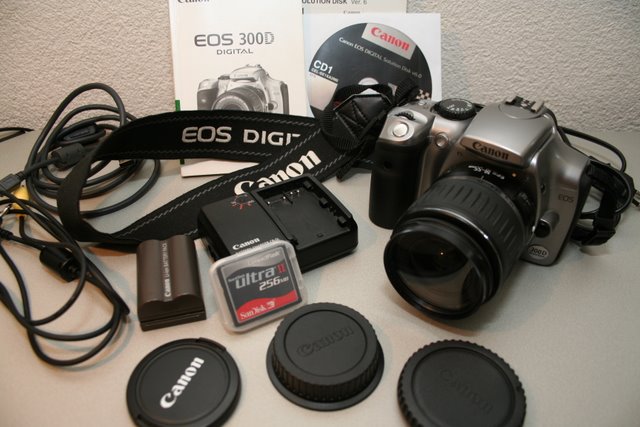
As I told you earlier I got myself a Canon 350D camera... So it was time to sell the got old (well old...) 300D or Rebel as the rest of the world calls it.

I tried the dutch e-bay site marktplaats.nl, but that turned out to be a mistake... A lot of 300D's there and eventually a shitty price!

So I thought hey what the hack, I might as well sell it to my brother-in-law. He likes to play around with photography since he's been in Mexico this summer, still analog back then (seems like ages ;-)) and now he's moving on into the digital world! Posted by Picasa

Thursday, November 02, 2006

The next post....

As you can see it's hard to get into the Blog rhythm...

Here is a try to get it on!

I've been uploading some pictures to my picasaweb site (http://picasaweb.google.com/arjan.kramer) like the one you see here from my daughter! Take a look around, I think they are nice ;-)

A lot happend the last few weeks, a couple of highlights:
- I got the Canon 350D digital camera! Woowie!!!
- I'm currently working (with a couple of colleagues of the German part of Capgemini) on a Proposal for a big German company. I might have to go there for approx. 6 months.
- I was asked to participate in a Leadership development programme within Capgemini Netherlands!!!

I will get back with more on these topics soon ;-) Posted by Picasa

Monday, March 13, 2006

First post....

Well, I finally managed to startup a blog...

This is my first posting, hope you'll come back and check my blog again!

Yesterday our daughter Anne-Roos was christened in the church in Buurmalsen. It was a very nice moment in her (until now still) short life.
The band I play in, played a couple of Christian songs during the service, and Anne-Roos was just sleeping during the whole thing!

Hope to show you some new pics soon!